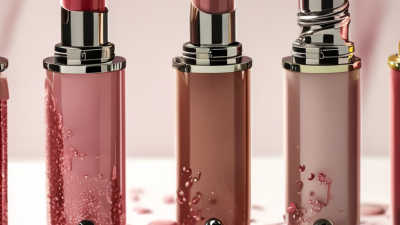
Why Choose a Lip Gloss Machine for Your Business?
The beauty market is moving toward faster, smaller, and more flexible production. Grand View Research reports continued growth in the global lip care market, supported by product innovation, social commerce, and changing consumer preferences. Lip gloss remains attractive because brands can refresh colors, finishes, and packaging without rebuilding an entire product line.
That is where a lip gloss machine can create practical value. A suitable filling machine helps deliver consistent volumes, cleaner transfers, and smoother production flow. Imagine filling 10 ml tubes with fewer drips, steadier weights, and less product left inside the hopper. These details matter. They influence appearance, material costs, and customer trust.
Small improvements accumulate.
Industry reports from Mordor Intelligence and Fortune Business Insights also highlight the broader cosmetics sector’s demand for efficient, scalable manufacturing. Automated or semi-automated equipment can support this demand while reducing repetitive manual work. However, buying a machine is not automatically the right decision. Product viscosity, filling accuracy, cleaning requirements, batch size, and operator training must be evaluated carefully.
A machine that performs well with a lightweight gloss may struggle with thicker formulas, shimmer particles, or cooling ingredients. That point is easy to overlook. It should not be.
Reliable equipment selection requires more than comparing prices online. Businesses should review technical specifications, test samples, confirm contact-material standards, and assess after-sales support. Cosmetic manufacturers must also follow applicable quality, hygiene, labeling, and safety requirements in their target markets. With realistic planning, a lip gloss machine can become a measured investment rather than an expensive shortcut.
Market Context: Lip Care’s 5.9% CAGR, Grand View Research
Why Choose a Lip Gloss Machine for Your Business?
Grand View Research reports a 5.9% compound annual growth rate for the lip care market. This figure signals rising consumer interest, but it does not guarantee sales. Customers increasingly examine texture, shine, comfort, packaging, and ingredient transparency. Businesses entering this market need repeatable production, not attractive ideas alone.
A lip gloss machine can support that discipline. It helps operators blend oils, pigments, and conditioning ingredients more consistently. Controlled mixing may reduce bubbles, uneven color, and wasted batches. Heated vessels can improve flow when formulas contain waxes or thick emollients. These details matter when filling narrow tubes on a busy worktable. Small variations become visible under bright retail lighting.
Equipment is not a shortcut. Staff still need documented procedures, cleaning checks, batch records, and suitable quality testing. A compact machine may suit a growing workshop, while a larger system could create unnecessary complexity. Capacity should match realistic orders, storage space, and trained labor. The 5.9% market projection encourages planning, not rushing. Some businesses may overbuy. That becomes an expensive lesson. A well-chosen machine should protect consistency and leave room for careful formula development.
Why Choose a Lip Gloss Machine for Your Business? - Market Context: Lip Care’s 5.9% CAGR, Grand View Research
A data-led overview of market momentum and practical production considerations for lip gloss businesses.
| Business Dimension |
Data or Benchmark |
Why It Matters |
Implication of Using a Lip Gloss Machine |
| Lip care market growth |
5.9% compound annual growth rate |
A growing category can create opportunities for new product launches and additional production capacity. |
Supports repeatable output when demand increases and product lines expand. |
| Product formats |
Liquid gloss, tinted gloss, lip oil, treatment gloss, and gloss with suspended effects |
Different viscosities, pigments, and particles require consistent mixing and filling. |
A configurable machine can improve process consistency across multiple formulas. |
| Filling accuracy |
Target accuracy commonly specified by equipment suppliers at approximately ±1% to ±2%, depending on formula and package |
Accurate dosing reduces underfilled units, product giveaway, and package-to-package variation. |
Automated dosing provides more uniform fill volumes than manual filling. |
| Typical package sizes |
Approximately 2–10 mL for many lip gloss and lip oil packages |
Small containers require precise control because minor volume differences represent a larger percentage of the total fill. |
A precision filling system is suitable for small-volume cosmetic packaging. |
| Production scalability |
Output depends on fill volume, nozzle count, formula viscosity, container handling, and operator workflow |
A single universal output figure would not accurately represent every lip gloss formula or package. |
Modular equipment allows capacity to be matched to current demand and expanded later. |
| Formula handling |
Lip gloss formulas may contain oils, esters, waxes, polymers, pigments, and suspended particles |
Viscosity and particle distribution affect pumping, filling speed, and product uniformity. |
Controlled agitation and suitable pump selection help maintain a consistent formula during filling. |
| Changeover and cleaning |
Changeover time varies with product design, contact-part layout, cleaning method, and color differences |
Frequent color or formula changes can reduce available production time. |
Removable product-contact parts and accessible surfaces can simplify sanitation and reduce downtime. |
| Quality control |
Key checks include fill weight or volume, appearance, color uniformity, leakage, closure fit, and microbiological safety |
Consistent process controls help reduce rejects and support cosmetic quality requirements. |
Repeatable machine settings make batch records and in-process checks easier to manage. |
| Business value |
Lower manual dependency, improved repeatability, and better production planning |
The financial benefit depends on labor cost, utilization, maintenance, rejects, and product demand. |
A machine is most valuable when production volume and consistency requirements justify the investment. |
Market reference: Grand View Research reports a 5.9% compound annual growth rate for the lip care market. Equipment-related figures are practical industry benchmarks and should be verified against the selected formula, container, and machine specification.
What a Lip Gloss Machine Is and How It Automates Production
Why Choose a Lip Gloss Machine for Your Business?
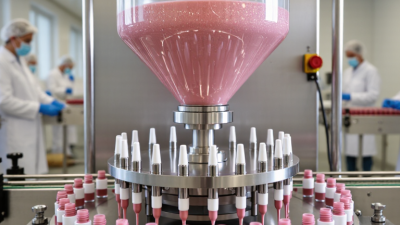
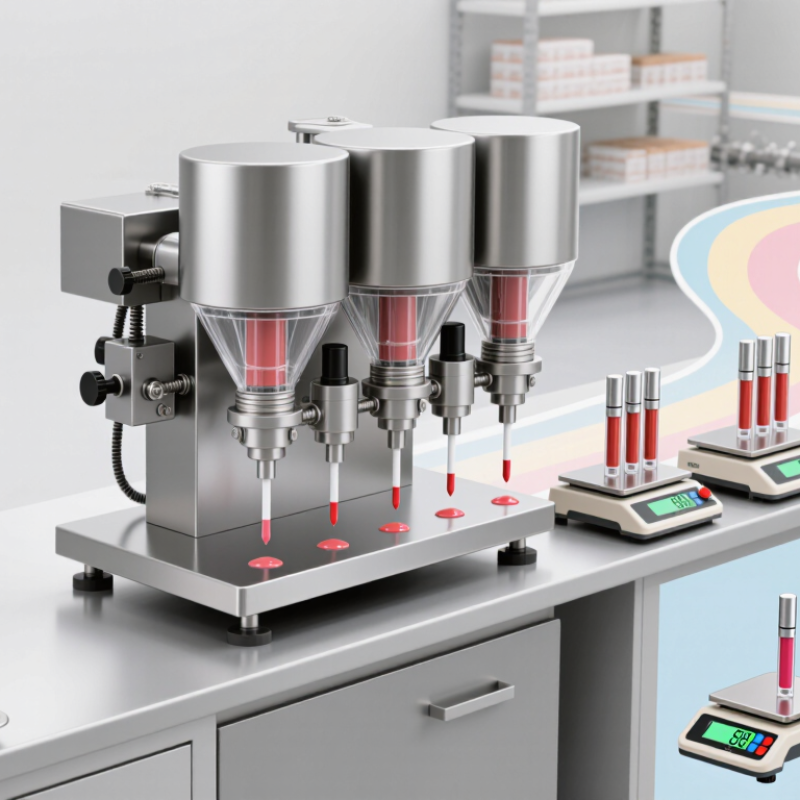
A lip gloss machine is production equipment designed to mix, heat, fill, and sometimes cap lip gloss containers. It replaces many repetitive manual steps with controlled mechanical actions. A typical system includes a heated mixing tank, an agitator, a filling pump, and adjustable nozzles. These parts help maintain a smoother texture and more consistent fill volume.
The automation process begins when ingredients enter the mixing tank. Controlled heat can soften thick materials, while steady agitation helps reduce separation and air bubbles. The pump then transfers the gloss into containers at a selected volume. Operators can adjust speed, temperature, and filling levels for different formulas. This improves workflow and reduces product waste. However, automation is not magic. A rushed calibration may cause dripping, uneven fills, or overheated material. Regular cleaning and test runs remain essential. Small details matter.
Tips: Match the machine to your formula’s viscosity. Test several container sizes before full production. Keep a simple maintenance log. Record temperature, speed, and filling results after each trial. One overlooked setting can affect an entire batch.
Why Choose a Lip Gloss Machine for Your Business?
Typical production output ranges show how automation can increase filling efficiency as a business scales.
Manual filling commonly handles around 1–5 units per minute, while semi-automatic equipment can reach approximately 10–30 units per minute. Fully automatic lip gloss filling systems may process about 30–80 units per minute, depending on the formula, container size, filling accuracy, and machine configuration.
Core Components, Filling Accuracy, Capacity, and Production Speed
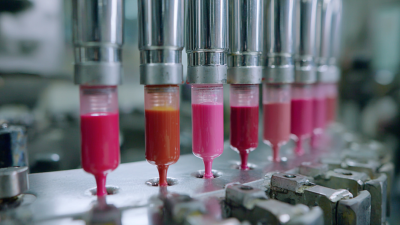
A lip gloss machine earns its place through controlled filling, stable heating, and repeatable output. The core system usually includes a hopper, agitator, heated lines, piston pump, nozzles, and a programmable control panel. Each part matters when formulas contain waxes, oils, pigments, or shimmer. A cold nozzle can create stringing. An aggressive agitator can introduce bubbles. I have seen small adjustments change the finish noticeably.
Filling accuracy protects both margins and customer trust. High-quality piston systems can often reach approximately ±1% to ±2% accuracy, depending on viscosity and container design. Actual performance requires testing. Grand View Research estimates continued growth in cosmetic packaging demand, while PMMI’s 2024 packaging machinery reporting highlights labor efficiency and equipment uptime as major investment drivers. These findings support automation, but they do not replace calibration. A 5 ml tube filled 0.1 ml over target can waste significant product across thousands of units. That detail is easy to underestimate.
Tips: Ask suppliers for a sample run using your actual formula and containers. Measure ten consecutive fills, not one. Compare average weight, variation, heating recovery, and nozzle cleanliness. Capacity also needs honest calculation. A machine rated at 30 containers per minute may run slower with thick gloss, frequent changeovers, or manual loading. Track usable speed, not brochure speed. A practical line may deliver 1,200 to 1,500 units per hour after pauses and inspections. That is less impressive, perhaps, but more useful for planning.
Selection Standards: ISO 22716, FDA Compliance, and Machine Scalability
Why Choose a Lip Gloss Machine for Your Business?
Selection Standards: ISO 22716, FDA Compliance, and Machine Scalability
Lip gloss production demands more than attractive packaging. Viscous formulas can string, drip, or trap air during filling. A suitable machine should offer heated hoppers, adjustable dosing, and anti-drip nozzles. These details reduce waste and protect batch consistency. McKinsey’s 2023 beauty report estimates the global beauty market may reach $580 billion by 2027. That growth increases pressure on smaller manufacturers to scale without losing control.
ISO 22716 supports good manufacturing practices, including hygiene, documentation, training, and quality checks. The machine itself does not make a facility ISO 22716 compliant. Operators still need cleaning records, material traceability, and controlled maintenance. In the United States, FDA requirements under the Modernization of Cosmetics Regulation Act include facility registration and product listing obligations. A machine should support those systems through recipe storage, batch records, and repeatable dosing. It cannot replace them. That distinction is often missed.
Tips: Request cleaning demonstrations, dosing accuracy data, and changeover times before buying. Check whether parts contact materials safely. Ask for validation support, even if the supplier avoids that phrase. A scalable model may begin with one filling head and later accept modular upgrades. However, faster output is not always better. Excessive speed can increase bubbles, rejected tubes, and operator mistakes. Review real production samples, not only catalog claims. My practical concern is simple: many buyers calculate capacity first and cleaning time later. That choice can become expensive.
 Skip to content