Skip to content
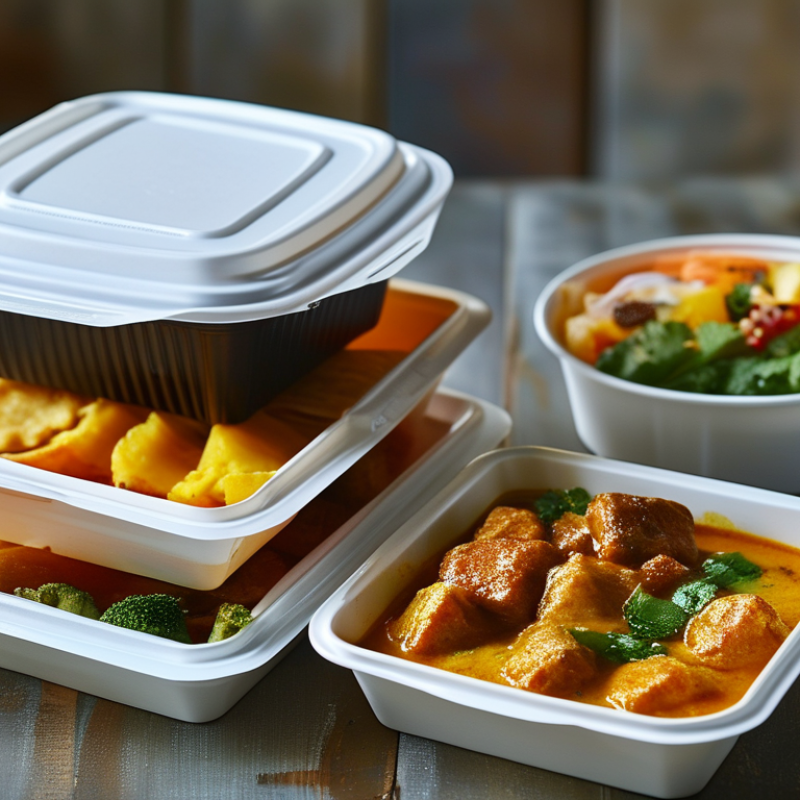
Plastic Take Out Food Container choices now sit at the intersection of convenience, safety, cost, and environmental responsibility. Restaurants need containers that resist leaks, protect hot meals, and stack efficiently during delivery. A thin lid may reduce material use, yet it can fail beside a steaming curry. Small design decisions become visible customer experiences.
The OECD’s Global Plastics Outlook reported approximately 353 million tonnes of plastic waste in 2019, while only 9% was recycled. Its findings show why container selection cannot depend on price alone. Grand View Research also identifies food packaging as a major global packaging segment, supported by takeaway meals, delivery services, and changing consumer habits. These reports provide useful direction, although market forecasts differ between research firms. That uncertainty deserves attention.
Professor Richard Thompson OBE, a leading marine plastics researcher, has said, “Plastic is a wonderful material: cheap, versatile, durable, and safe.” His observation explains why the Plastic Take Out Food Container remains widely used. However, the statement is incomplete without discussing disposal, recycled content, and real-world collection systems. A container marked recyclable may still be rejected locally. It may also carry food residue, which complicates sorting. This guide compares common container types, including polypropylene, polyethylene terephthalate, polystyrene, and molded fiber alternatives. It examines heat resistance, leak control, transparency, stacking, food-contact suitability, and end-of-life options. The best choice is rarely the cheapest one. It should match the meal, delivery distance, customer expectations, and available waste infrastructure. Even this approach has limits. Actual performance depends on manufacturing quality and local conditions.
Plastic takeout containers are easier to understand when their ASTM D7611 resin codes are read correctly. The number inside the recycling triangle identifies the primary plastic resin, not guaranteed recyclability or food safety.
Code 1, PET, is common in clear containers for salads, fruit, and cold meals. It offers good visibility but may deform under high heat.
Code 2, HDPE, is sturdy and often used for tubs or opaque containers.
Code 4, LDPE, feels softer and suits flexible lids or bags.
Code 5, PP, handles heat better and appears frequently in containers designed for warm food.
Still, “heat resistant” does not always mean microwave safe.
Codes 3 and 6 represent PVC and PS. They can appear in specialized packaging, but their practical use depends on the product design and local requirements. Code 7 means Other, including mixed or less common plastics. It tells you very little without additional material information. That is the weak point.
A code is only a starting clue. It does not confirm that a container is suitable for oily food, repeated use, freezing, or reheating. Check the manufacturer’s food-contact statement and handling instructions.
Look for warping, cracks, or cloudy surfaces before use. A clean-looking container may still be unsuitable for hot food.
Disposal options also vary by location, even when the container carries a familiar number.
Polypropylene (PP, Code 5) is widely used for take-out containers because it balances low weight, toughness, and heat resistance. PlasticsEurope’s Plastics – the Facts 2023 report identifies polypropylene as one of Europe’s largest plastics families, representing about 19% of plastics demand in 2022. That scale reflects practical value, not automatic microwave safety. The container still needs suitable design, food-contact compliance, and clear heating instructions.
PP commonly softens near 130°C and melts around 160–170°C, depending on its formulation. However, microwave heating can create uneven hot spots, especially with oily sauces.
The U.S. FDA Food Code 2022 sets 74°C as a reheating benchmark for many cooked foods, yet a container may deform below its melting point. ASTM D4101 helps classify polypropylene materials, but it does not certify every finished container for microwave use.
Look for a microwave symbol, temperature limit, and ventilation guidance. Code 5 alone is not enough.
Tips: Heat food in short intervals, stir between cycles, and leave the lid partly open. Avoid direct flame, ovens, and empty-container heating.
Check for warping, cracks, or a sharp plastic odor. A practical trial may reveal weaknesses, but it should not replace supplier test data.
Some containers perform well once, then fail after repeated heating. That detail is easy to overlook.
PET and HDPE are common choices for plastic takeout food containers. PET, identified by Code 1, offers strong clarity. Food, sauces, and layered meals remain visible. It also provides useful rigidity and gas resistance. However, PET can deform under high heat unless the formulation supports hot filling. HDPE, identified by Code 2, is usually translucent or opaque. It handles impact better and performs well with cold foods, soups, and heavier portions. Clear does not mean safer.
The FDA does not automatically approve every container. PET must meet applicable food-contact requirements, including 21 CFR 177.1630. HDPE commonly falls under 21 CFR 177.1520, with additives requiring separate compliance support. Suppliers should provide migration testing, intended-use limits, and temperature data. The container’s safety depends on resin, colorants, additives, processing, and food type. A recycled-content claim also needs evidence. NAPCOR’s 2023 report placed U.S. PET bottle recycling at roughly one-quarter in 2022. PlasticsEurope reported 413.8 million tonnes of global plastics production in 2023. These figures show scale, but they do not prove every package is recyclable locally.
Tips: Choose PET when visibility matters and the meal is cool or moderately warm. Choose HDPE when impact resistance matters more than appearance. Check the supplier’s FDA compliance statement, temperature range, and closure fit. Avoid assuming a recycling code guarantees acceptance. That assumption is common, and often wrong. In practice, a small lid mismatch can create more leakage than the container material itself.
| Data Dimension | PET — Polyethylene Terephthalate | HDPE — High-Density Polyethylene |
|---|---|---|
| Resin identification code | Code 1 — PET or PETE | Code 2 — HDPE |
| Typical appearance | Naturally clear and glossy; can be tinted or made opaque with approved additives. | Usually translucent or opaque with a milky appearance; generally less optically clear than PET. |
| Clarity advantage | Excellent product visibility, making it suitable when customers need to see the food or contents. | Limited visibility can help conceal contents, but it is less suitable when maximum presentation clarity is required. |
| Strength and rigidity | Good stiffness and dimensional stability for clear food tubs, deli containers, and cold-food packaging. | Good toughness, flexibility, and impact resistance; useful for containers that may be squeezed or handled roughly. |
| Common take-out applications | Cold salads, fruit, desserts, bakery items, deli foods, beverages, and display-oriented food containers. | Cold foods, sauces, soups intended for suitable packaging formats, dairy products, condiments, and containers requiring toughness. |
| Moisture barrier | Very good resistance to water and moisture transfer for many food-packaging applications. | Excellent moisture barrier, especially suitable for wet foods and products that must retain moisture. |
| Gas and aroma barrier | Generally provides a stronger barrier to oxygen and carbon dioxide than HDPE, although performance depends on wall thickness and design. | Good moisture barrier but generally more permeable to oxygen and some aromas than PET. |
| Grease and chemical resistance | Good resistance to many food oils and dilute acids; compatibility should be verified for hot, fatty, or highly acidic foods. | Good resistance to many household chemicals, acids, bases, and food ingredients; formulation and temperature still affect performance. |
| Heat-use considerations | Standard PET take-out containers are commonly selected for cold or ambient foods. Do not assume microwave or hot-fill suitability unless the package is specifically designed and labeled for that use. | HDPE can tolerate more impact and temperature variation than many clear plastics, but ordinary containers should not be used for microwave heating or very hot foods unless specifically rated and labeled. |
| Typical food-contact regulatory basis in the United States | PET materials may be covered by FDA food-contact regulations such as 21 CFR §177.1630 when the composition and intended conditions of use meet the applicable requirements. | Polyethylene materials may be covered by FDA food-contact regulations such as 21 CFR §177.1520 when the composition and intended conditions of use meet the applicable requirements. |
| Important FDA compliance point | The recycling code alone does not prove food-contact compliance. The finished article, additives, manufacturing process, food type, temperature, and contact time must be evaluated. | The recycling code alone does not prove food-contact compliance. The finished article, additives, manufacturing process, food type, temperature, and contact time must be evaluated. |
| Recycling profile | Widely collected in many recycling systems, but actual acceptance depends on local collection and sorting infrastructure. | Commonly recyclable where local programs accept rigid HDPE containers; local rules determine actual recyclability. |
| Best choice when... | Clear presentation, product visibility, stiffness, and stronger gas-barrier performance are the main priorities. | Toughness, impact resistance, moisture protection, and resistance to many food ingredients are the main priorities. |
PS, marked with recycling code 6, includes rigid polystyrene and expanded polystyrene (EPS). EPS contains many air pockets, giving it strong insulation. ASTM C578 data commonly place EPS thermal conductivity near 0.033–0.038 W/m·K. A hot meal stays warm longer, while chilled food faces less rapid temperature gain.
That performance has limits. Thin walls lose heat quickly, and crushed foam cannot protect food evenly. I have also found that loose EPS lids may shift during delivery, exposing food to air. Small detail, but important.
Code 6 identifies the resin, not guaranteed recyclability. Collection remains limited in many areas because lightweight foam is difficult to transport economically. The U.S. Food and Drug Administration permits specific polystyrene food-contact uses under defined conditions, while local authorities may restrict EPS food-service sales or disposal.
Rules are changing unevenly. The United Nations Environment Programme’s 2023 Turning off the Tap report estimated that global plastic pollution could fall by 80% by 2040 through reuse, improved systems, and policy measures. That figure is not a direct EPS forecast, but it signals stronger pressure on single-use formats. Food operators should check local requirements, temperature needs, and disposal routes before choosing PS or EPS. Insulation matters. So does what happens afterward.
Recycling and compostability are not interchangeable claims. EPA data places food-service packaging within the municipal solid waste stream, where containers often become contaminated with sauce, oil, and leftover food. A clear container may look recyclable, yet local facilities might reject it because of its shape, size, or residue. PET, HDPE, and polypropylene containers are commonly recyclable in some systems. Rules vary widely.
Compostable containers require closer examination. ASTM D6400 is a technical standard for plastics designed for industrial composting. Testing considers biodegradation, physical disintegration, compost quality, and possible harm to plants. Passing ASTM D6400 does not mean the container will break down in a backyard pile. It also does not guarantee acceptance at every commercial facility.
Read the label carefully. “Compostable” should identify the intended system, not simply suggest natural decomposition. A food container with a thick lid may need different processing conditions than a thin tray. Remove food scraps when local guidance requires it. Some facilities accept certified compostable packaging; others remove it as contamination. I have seen well-intended sorting fail when a greasy container entered a recycling bin. The label helped, but the local rule mattered more. Check the facility before choosing between recyclable plastic, fiber, and compostable plastic.


30 Beach Street, Mt Vernon, NY 10550
914-239-3878 sale@bbqmachine.com
© 2025 by TurboFil Packaging Machines, LLC