Skip to content
Choosing the best automatic bottle filling machine begins with the product, not the machine’s advertised speed. A clear liquid may fill quickly, while syrup, oil, or foaming beverages need slower, controlled movement. Product viscosity, temperature, container shape, neck finish, and target fill volume all influence the correct system.
David Beach, president of E-PAK Machinery, offers a practical reminder: “The best filling machine is the one that fits the product, container, and production goal.” That principle sounds simple. It is often ignored. A machine running 120 bottles per minute may become a poor investment if changeovers take too long or accuracy declines during long production runs.
Look closely at the filling technology. Overflow fillers suit many thin liquids and create consistent visual levels. Pump fillers provide better control for thicker products. Time-pressure systems may offer flexibility, but they require careful adjustment. Servo-driven equipment can improve repeatability, although advanced controls may increase training and maintenance demands.
Inspect the details.
Check stainless-steel construction, hygienic design, clean-in-place capability, nozzle accessibility, and electrical safety. Ask for production trials using your actual bottles and liquid. Observe dripping, splashing, foaming, and rejected containers. These small issues become expensive at scale.
Do not choose from a brochure alone. Request documented accuracy results, maintenance schedules, spare-parts availability, and operator training. Consider future products, too. A machine that fits today’s bottle may limit tomorrow’s packaging plans. I would also leave room for doubt: laboratory results rarely match every factory condition. The final choice should balance speed, reliability, sanitation, flexibility, and total ownership cost.
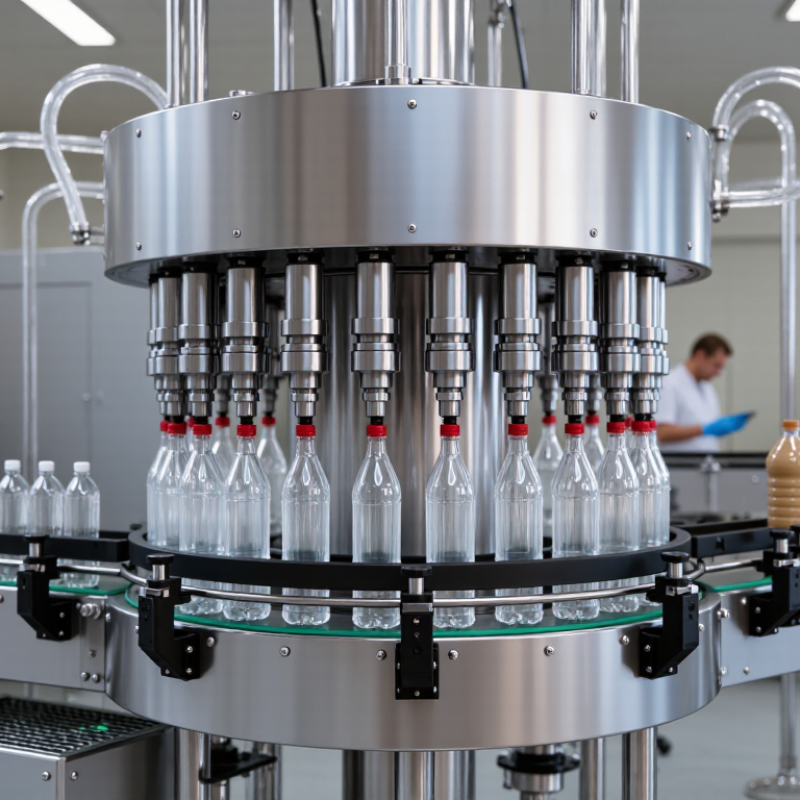
An automatic bottle filling machine measures liquid, positions containers, and releases a controlled volume. It can use gravity, pressure, piston, or flow-meter technology. The correct system depends on viscosity, foaming, bottle shape, and filling accuracy. A thin beverage may need a flow-meter filler, while thick syrup often requires piston control. Small details matter.
PMMI’s 2023 State of the Industry report identified labor availability and productivity as important packaging investment drivers. This explains why automatic filling systems attract manufacturers seeking stable output with fewer manual steps. Grand View Research valued the global filling machines market at over 7 billion U.S. dollars in 2023, with continued growth expected through the decade. These figures suggest strong demand, but market growth does not guarantee a suitable machine.
Observe the production line before choosing equipment. Check the target speed, bottle diameter, liquid temperature, cleaning method, and allowable product loss. A machine rated for 120 bottles per minute may perform poorly with foamy liquid or irregular containers. Ask for a real-product test. Request recorded accuracy results, changeover time, and cleaning instructions. Stainless steel contact parts and accessible seals can support hygienic operation. However, automation is not maintenance-free. Sensors drift, nozzles clog, and operators still need training. I have seen impressive specifications fail when the bottle neck changes slightly. Specification sheets are useful, but practical testing is more reliable.
How to Choose the Best Automatic Bottle Filling Machine
Defining production and packaging requirements should guide every equipment decision. Record the product’s viscosity, temperature, foam level, and particle size. Water-like liquids may need a different filling method than thick sauces or oils. Measure each bottle carefully, including neck size, height, shape, and material. A small shoulder can affect nozzle positioning. It can also cause spills.
Set a realistic output target, not an optimistic one. Calculate bottles per minute during normal operation, including pauses, cleaning, and changeovers. Decide the required filling accuracy and acceptable product loss. Closure type matters too. Caps, pumps, and seals may require different conveyor spacing and handling systems. In plant evaluations, I have seen teams choose speed first and discover that their storage area cannot support the finished output. The spreadsheet looked convincing. The workflow did not.
Tips: Test real product samples in the proposed containers. Ask for documented accuracy results, cleaning procedures, changeover times, and utility requirements. Check whether operators can reach controls safely and inspect nozzles without awkward movement. Leave space for maintenance access. A compact machine is not always practical. Discuss future products, but avoid paying for features you cannot use. Requirements often change after installation, so record assumptions and review them with production, quality, and maintenance teams before approval.
Choosing an automatic bottle filling machine starts with the liquid, not the machine frame. Viscous syrups need piston fillers, while free-flowing water suits gravity or time-pressure systems. Foaming liquids often perform better with overflow filling, which keeps the visible level consistent. Shorter is safer.
PMMI reported U.S. packaging machinery shipments of about $10.2 billion in 2023. Its industry research also identifies labor availability and format flexibility as major automation drivers. That pressure favors inline machines for moderate output and rotary machines for continuous, high-speed production. However, speed can hide problems. A rotary filler may waste more product during changeovers if operators need excessive adjustment.
During factory trials, measure fill accuracy at startup, mid-run, and shutdown. Test the smallest and largest bottle sizes. Record changeover minutes, cleaning access, foaming, and rejected containers. Net-weight fillers provide strong control for expensive liquids, but they usually require accurate scales and stable bottle positioning. Pump systems handle wider viscosity ranges, though seals and tubing need disciplined maintenance.
A 2024 market analysis by Fortune Business Insights estimated the liquid filling machine market at roughly USD 7.3 billion in 2023. Market growth does not guarantee suitability. One overlooked detail is the capper-filler connection. Poor timing can create drips, tilted caps, and avoidable downtime. Specify product temperature, viscosity, target speed, container tolerance, and cleaning method before comparing quotations. A cheaper machine may become expensive after repeated format changes.
How to Choose the Best Automatic Bottle Filling Machine
Accuracy should be measured, not assumed. In practical trials, compare the target volume with results from at least thirty filling cycles. Record the average, deviation, and occasional overfills. A machine with servo-driven pistons may suit thick liquids, while a flowmeter system often handles free-flowing products efficiently. Check whether the control panel allows quick adjustments for different volumes. Small displays can slow operators down.
Compatibility matters just as much. Test the machine with your actual bottle shape, material, neck size, and liquid temperature. A narrow opening may cause splashing or trapped air. Foaming liquids need slower filling speeds and suitable diving nozzles. Inspect every product-contact component, including seals and pipes. These parts should resist the liquid and support practical cleaning procedures.
I once focused too heavily on advertised speed. The faster setting produced more drips and rejected bottles. That experience changed my evaluation process. I now watch the full cycle, from bottle positioning to nozzle withdrawal. Check whether the conveyor matches upstream and downstream equipment. Leave room for future container changes. A perfect result with one bottle proves little. Ask for sample testing, maintenance records, and accuracy data under realistic conditions. Some decisions still involve compromise. A slightly slower machine may deliver better consistency, simpler cleaning, and fewer interruptions.
Evaluation benchmark based on the practical priorities commonly used when comparing automatic bottle filling equipment. Scores are normalized from 1 to 5, where 5 represents the strongest selection priority.
Accuracy and product compatibility should receive the greatest attention because they directly affect waste, product quality, and production consistency. Speed, cleanability, and changeover flexibility are also important when one machine must handle multiple bottle sizes or liquid types.
How to Choose the Best Automatic Bottle Filling Machine
Selecting a machine by purchase price alone can create expensive problems later. Calculate the total cost, including installation, training, energy use, spare parts, and downtime. A machine with simple controls may reduce operator errors and shorten training time. Check whether its filling range matches your bottle sizes and liquid viscosity. Changing formats should not require specialized tools. That matters.
Safety requires more than an emergency stop button. Look for guarded moving parts, reliable sensors, clear access panels, and automatic shutdown during abnormal operation. Product-contact surfaces should be corrosion-resistant and easy to clean. Ask for documented cleaning procedures and material specifications. In practical plant evaluations, small design details often affect hygiene and worker safety. Operators need clear instructions, not confusing screens. Do not guess.
Maintenance should be assessed before purchase. Inspect how quickly technicians can reach pumps, valves, seals, and filling nozzles. Tool-free adjustments can reduce service time, but they may not always provide the strongest long-term stability. This is worth checking during a live demonstration. Request maintenance schedules, parts availability, and technical training. A machine can perform accurately in testing yet disappoint after months of heavy use. That possibility deserves honest consideration.
Choose equipment with measurable performance data, including filling accuracy, changeover time, and cleaning duration. Ask current users about recurring faults, not only advertised strengths. Leave space around the machine for inspection and repairs. A lower initial cost may be reasonable for a simple operation, but only when safety and maintenance needs remain manageable.
| Machine Configuration | Typical Output | Indicative Purchase Cost | Best Application | Safety Considerations | Maintenance Profile | Cleaning Time | Overall Selection Fit |
|---|---|---|---|---|---|---|---|
| Automatic 2–4 Head Volumetric Filler Low-volume option | Approximately 600–2,400 bottles/hour, depending on bottle size, liquid viscosity, and operator loading. | Approximately US$8,000–US$25,000 for the filling unit, excluding optional conveyors, capping, and labeling equipment. | Start-ups, seasonal products, frequent product changeovers, and facilities with limited floor space. | Select guarded filling zones, emergency-stop buttons, overload protection, and food-contact parts made from suitable stainless steel. | Relatively simple. Inspect seals, valves, hoses, and filling nozzles regularly; replacement parts are generally accessible. | About 20–45 minutes for a standard water-based product, excluding sterilization or validation procedures. |
★★★★☆ Good entry-level balance |
| Automatic 6–12 Head Inline Filler Flexible production choice | Approximately 3,000–12,000 bottles/hour, depending on fill volume, product properties, and container handling. | Approximately US$25,000–US$80,000 for a standard inline filling system with basic controls. | Small to medium beverage, household chemical, cosmetic, and personal-care production lines. | Use interlocked guards, protected moving parts, controlled access to the conveyor, and electrical components appropriate for the production environment. | Moderate. Nozzles, pumps, flow meters, conveyor guides, and product-contact gaskets require scheduled inspection and calibration. | About 30–60 minutes, depending on the number of product-contact components and the cleaning method. |
★★★★★ Strong all-round option |
| Automatic Rotary Filler High-throughput option | Approximately 12,000–40,000 bottles/hour for compatible containers and stable, continuously running products. | Approximately US$80,000–US$250,000 or more, depending on speed, number of valves, automation level, and integrated modules. | High-volume beverage and liquid-product facilities that run long production batches with limited changeovers. | Require fixed guarding around the rotating carousel, access-door interlocks, emergency stops, safe-speed controls, and formal lockout/tagout procedures. | More demanding. The carousel, filling valves, drive system, sensors, and change parts need planned preventive maintenance and skilled technicians. | About 45–90 minutes, with additional time possible for full circuit sanitation and product changeover. |
★★★★☆ Best for sustained volume |
| Automatic Servo-Piston Filler Viscous-product option | Approximately 1,000–8,000 bottles/hour, depending on product viscosity, fill volume, and number of pistons. | Approximately US$35,000–US$120,000, depending on servo controls, piston count, hopper design, and cleaning features. | Sauces, creams, gels, oils, syrups, and other products requiring accurate volumetric dosing. | Include guarding around piston mechanisms, pressure relief where required, food-grade seals, and controls that prevent filling when containers are absent. | Moderate to high. Pistons, seals, valves, hopper components, and product-contact tubing require careful inspection for wear and residue. | About 45–120 minutes, especially when the product is sticky or requires heated cleaning. |
★★★★☆ Accurate for viscous liquids |
| Automatic Monoblock Filler-Capper Space-saving option | Approximately 2,000–18,000 bottles/hour, depending on the filling method, cap type, and integrated components. | Approximately US$60,000–US$200,000, depending on filling heads, capper design, inspection equipment, and automation. | Facilities seeking a compact filling and capping line with fewer transfer points between machines. | Guard both filling and capping areas; verify cap-feeder guarding, torque-control protection, emergency stops, and safe access for adjustments. | Higher than a standalone filler because the capper, cap chute, sensors, star wheels, and change parts add service points. | About 45–90 minutes, depending on the number of product-contact parts and cap-handling components. |
★★★★☆ Efficient where space is limited |
Cost and capacity figures are indicative industry ranges in 2026 US dollars for new equipment. Actual results vary with liquid characteristics, bottle geometry, hygienic design, automation level, regional installation costs, validation requirements, and integration with upstream or downstream equipment. Always confirm machine guarding, electrical compliance, cleanability, and required maintenance procedures with the equipment supplier and applicable local regulations.


30 Beach Street, Mt Vernon, NY 10550
914-239-3878 sale@bbqmachine.com
© 2025 by TurboFil Packaging Machines, LLC